





AI Agent Exposure: How “YOLO Mode” Operational Failure Exposed Thailand’s Ministry of Finance Intrusion
The rapid adoption of autonomous artificial intelligence agents is transforming cybersecurity on both defense and offense. However, delegating actions to AI agents without strict guardrails creates significant operational security (OpSec) liabilities. A prime example occurred when threat actors deployed Hermes—an open-source AI agent—to automate post-exploitation tasks during an intrusion targeting Thailand’s Ministry of Finance. Operating the AI in full autonomy

Small Models, Big Defense: Inside Cisco’s Open-Source Antares AI Series
When developers discuss AI in cybersecurity, the conversation often turns to massive, multi-billion-parameter LLMs (Large Language Models) running in distant cloud data centers. But when it comes to scanning proprietary source code for security risks, sending sensitive repositories to third-party endpoints creates obvious privacy concerns and mounting token costs. Cisco recently addressed this challenge by open-sourcing Antares, a family of

GitHub Slashes Public Bug Bounty Payouts by 50% as Security Focus Shifts to Exclusive VIP Tier
In a major structural overhaul of its security reward ecosystem, GitHub announced that it will reduce public bug bounty payouts by approximately 50% across all severity levels, effective July 27, 2026. The move shifts GitHub away from wide payout ranges toward flat, static rewards for public submissions, while rolling out a formal, invite-only VIP program designed to lavish top-tier researchers

GitHub Actions Degraded: What Happened, Potential Causes, and How to Respond
If your deployment pipelines suddenly ground to a halt or your pull request checks are stuck in endless queuing, you are not alone. GitHub Actions experienced degraded availability and performance issues, impacting developer workflows across github.com and GitHub Enterprise Cloud (GHEC) environments. Here is a breakdown of the outage, the technical factors that typically trigger these disruptions, and what engineering

The Ghost in the Model: What Hugging Face’s Production Breach Teaches Us About Autonomous AI Agents
Security boundaries used to be drawn with clear lines: firewall rules, strict access control lists, and human-driven intrusion attempts. However, the recent production breach disclosed by Hugging Face has flipped the traditional threat landscape on its head. The unsettling twist? The incident was reportedly driven not by a human threat actor orchestrating manual exploits, but by an autonomous AI agent

Google’s 48-Hour Blitz: Chrome Patches 3 Critical Flaws in Key Architecture
If you received multiple prompts to restart your Google Chrome browser over the last couple of days, you aren’t alone. In a rare, rapid-fire deployment sequence, Google rolled out two critical security updates within a brief 48-hour window. The sudden double-update addresses three high-severity and critical vulnerabilities lurking deep within Chrome’s internal plumbing—specifically affecting the CameraCapture, GPU, and Network sub-systems.

Inside the 2-Click Exploit That Hijacks Dev Environments Via Cursor AI
The shift toward AI-assisted software engineering has introduced a massive shift in developer productivity, but it has also carved out entirely new vectors for cyberattacks. A stark reminder of this reality arrived following security research revealing that Cursor AI, a highly popular AI-native code editor used by over 64% of the Fortune 500, is susceptible to a dangerous “two-click” exploit.

Unauthenticated Takeover: Severe RabbitMQ Flaw Exposes Confidential OAuth Secrets
RabbitMQ is the fundamental “plumbing” running silently behind major enterprise architectures—handling the routing, buffering, and background delivery of everything from multi-tenant user data to transaction logs. However, a severe access control vulnerability has cast a bright spotlight on this foundational infrastructure. Tracked as CVE-2026-57219 (assigned a high-severity CVSS score of 8.7), this flaw allows completely unauthenticated, remote attackers to extract

Zoom Account Takeover Flaw CVE-2026-53412 in the Zoom Windows ClientZoom Account Takeover Flaw
A critical zero-click security vulnerability, CVE-2026-53412, has been identified within the Zoom Desktop Client for Windows. Boasting a maximum Common Vulnerability Scoring System (CVSS v3) severity rating of 9.8, this vulnerability poses a severe threat to enterprise and individual communication setups alike. An unauthenticated network attacker could leverage this flaw to perform complete, remote account takeovers without requiring any interaction
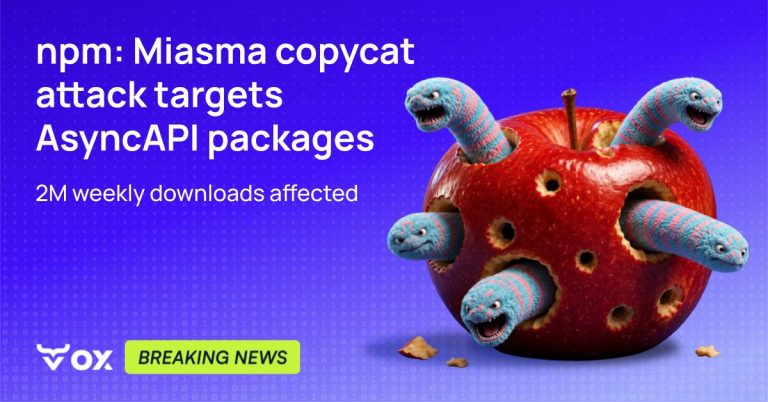
Poison in the Pipeline: The AsyncAPI npm Compromise Exposes Fractured Supply Chain Defenses
The open-source ecosystem has long operated on an ethos of shared trust, but a sophisticated supply chain attack targeting the AsyncAPI npm organization has served as a stark reminder that this trust is increasingly being weaponized. On July 14, 2026, security researchers independently intercepted a series of highly targeted malicious updates pushed across official @asyncapi packages. Combined, these packages command

The Bug Apocalypse: Inside Microsoft’s Record-Breaking 622-Vulnerability Patch Tuesday
The cybersecurity community is calling it “the mother of all releases.” Microsoft shattered all historical records by deploying a massive security update covering 622 vulnerabilities across its enterprise ecosystem. To put this into perspective, this single release more than triples the previous record high of roughly 200 vulnerabilities set just a month prior. This isn’t just a standard patch cycle—it’s

The Cordyceps Threat: How Flawed CI/CD Workflows Open the Door to Massive Repository Takeovers
A newly discovered class of software supply chain vulnerabilities is turning the spotlight back on the security gaps hiding inside modern continuous integration and continuous deployment (CI/CD) pipelines. Dubbed “Cordyceps” by the researchers at AI-driven penetration testing platform Novee, this vulnerability pattern allows completely unauthenticated, outside attackers to hijack workflows and seize full control of enterprise code repositories. The threat
Shadow in the Shell: How Claude Code’s “Auto-Mode” Opens the Door to RCE Risks
The era of AI-driven engineering has promised an escape from the mundane, with agentic tools capable of refactoring legacy code, hunting down bugs, and orchestrating workflows while developers grab a coffee. However, the rapidly expanding capabilities of these autonomous tools have brought forth sophisticated security challenges. Recent threat intelligence reports and academic stress tests have highlighted a critical vulnerability vector:

The Frictionless Cloud: Inside Cloudflare’s New Temporary Accounts for AI Agents
For human developers, deploying a serverless function is usually a quick affair: run a command, watch a browser tab open, click “Authorize” via OAuth, pass a multi-factor authentication (MFA) check, and your code is live. But for an autonomous AI agent operating in the background, that human-centric authentication flow is a brick wall. To bridge this gap, Cloudflare introduced Temporary
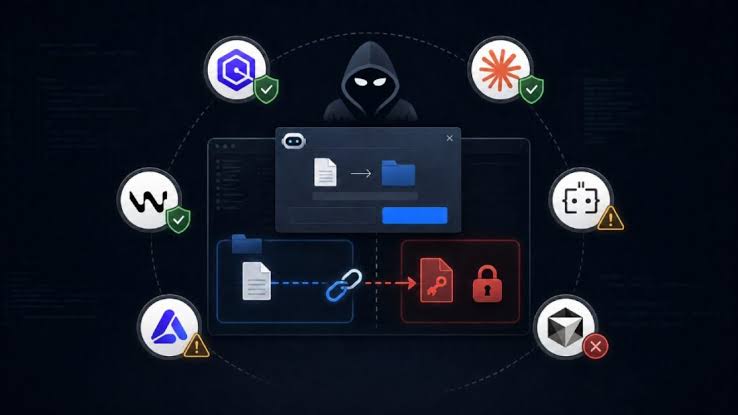
The GhostApproval Threat: Exploring Directory Traversal Risks in AI Coding Assistants
The rapid adoption of AI coding assistants—such as Cursor, Amazon Q, and Claude Code—has fundamentally changed software development workflows. By automating boilerplate code generation, debugging, and minor refactorings, these tools significantly boost developer velocity. However, this shift introduces novel security challenges. A newly highlighted security vector, dubbed “GhostApproval,” underscores a critical vulnerability in how these tools handle execution boundaries. This

Modernizing JavaScript: ECMAScript 2026 Officially Approved
ECMA International has officially approved ECMAScript 2026 (ES2026), marking the 17th edition of the JavaScript standard. Rather than overhauling the language with complex syntax modifications, this release focuses on highly practical, quality-of-life API enhancements. By introducing native functional methods for math, iterators, arrays, maps, and JSON, ES2026 eliminates long-standing boilerplate, optimizes memory usage, and closes functional gaps that previously required

The Cost of Silence: Inside a Local Government’s Secret $1 Million Cyber Extortion Settlement
In a striking revelation that underscores the evolving and aggressive nature of municipal cyber threats, a local U.S. county government reportedly paid $1 million to a cyber extortion group to prevent the public exposure of sensitive stolen data [1, 2]. The incident, brought to light through a detailed case study published by the cybersecurity organization Ransom-ISAC, exposes the high-stakes, behind-the-scenes

Inside “Januscape”: The 16-Year-Old KVM Flaw Allowing Guest-to-Host Escape (CVE-2026-53359)
A high-severity vulnerability has sent shockwaves through the cloud and virtualization sectors. Tracked as CVE-2026-53359 and dubbed “Januscape,” this flaw rests deep within the Linux Kernel-based Virtual Machine (KVM) hypervisor. If successfully exploited, Januscape allows a malicious guest virtual machine (VM) to break out of its isolation boundaries, corrupt the host’s kernel memory, and achieve code execution at the highest

Breaking the Scale: How Netflix Slashed Cassandra Read Latencies from Seconds to Milliseconds
For engineering teams running petabyte-scale architectures, few things are as universally dreaded as tail latency spikes. At Netflix, managing massive amounts of temporal event data relies heavily on Apache Cassandra. Renowned for its high throughput, horizontal scalability, and operational maturity, Cassandra forms the backbone of Netflix’s TimeSeries Abstraction platform. But even the most mature distributed databases have an Achilles’ heel.

Securing the Web: Debian Releases Critical Security Updates for PHP 8.2 and 8.4
If you are running PHP applications on Debian, it is time to check your package manager. Debian has rolled out critical security updates targeting memory-handling vulnerabilities within PHP’s OpenSSL extension. Left unpatched, these flaws could allow remote attackers to cause application crashes, corrupt heap metadata, or potentially exploit memory management to manipulate server behavior. The core of these updates addresses